Whole House Fan Size & Savings Calculator
Enter your home's square feet and ceiling height and the AC hours a fan could replace, pick your state, and get the fan size in CFM and the estimated savings for the season.
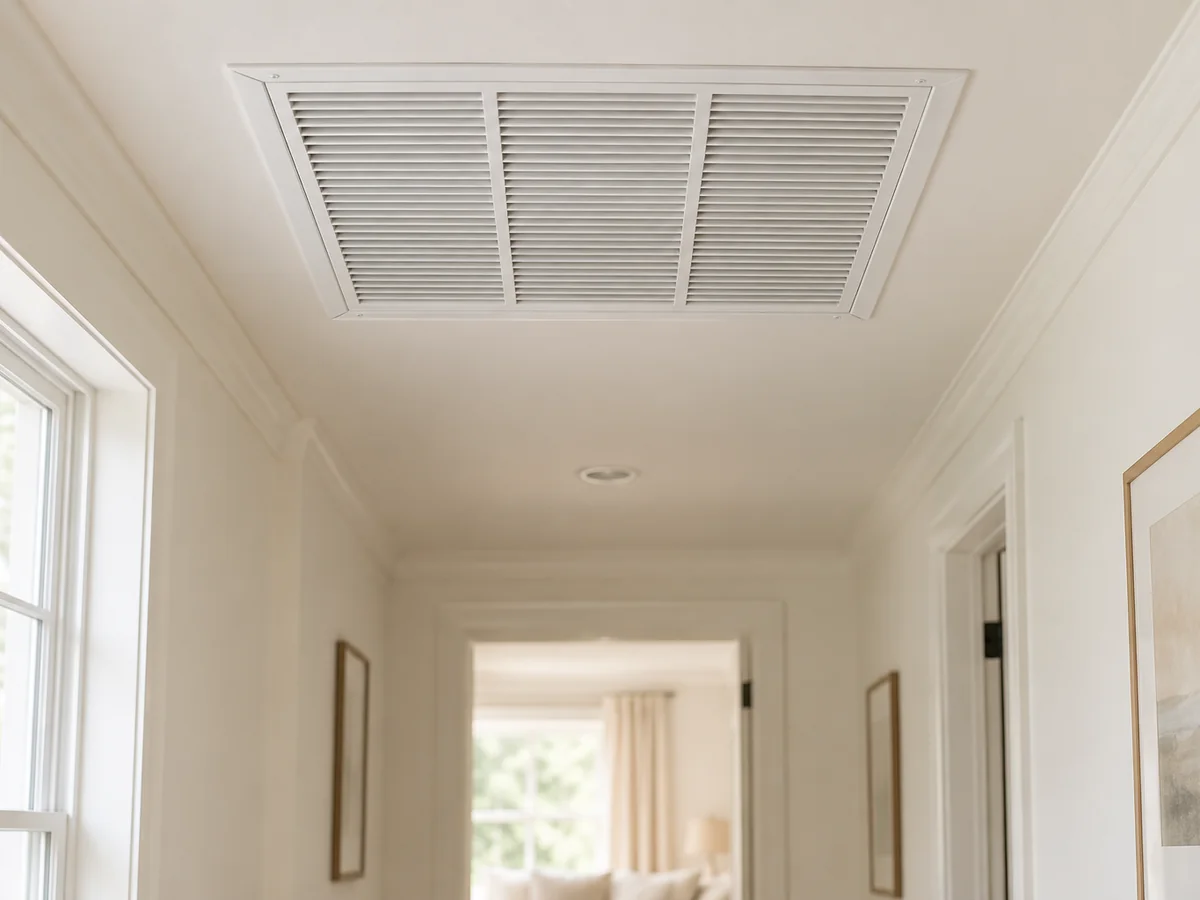
Whole house fan
C07Scenario A
Sets the electricity rate. Pick US average if you're not sure.
From EIA for US average. Use the rate on your bill if you know it.
Rate used: 18.4¢/kWh · US average · EIA reference 2025–26 (data as of 2026-09-26) ·
Estimated savings per season
A 8,000 CFM fan. It only works where nights cool down; in humid climates it pulls in damp air.
- Airflow needed (CFM)
- 8,000
- Fan power (kW)
- 1.20
- AC it replaces (kW)
- 2.57
- Savings per season
- $121.12
Estimate. Formula and sources are under “How it works”. Change any input; the result updates as you type.
Formula
How it works
- CFM = square feet × ceiling height × air changes per hour ÷ 60
- Fan power ≈ CFM ÷ 1,000 × 0.15 kW
- AC power = tons × 12,000 ÷ SEER2 ÷ 1,000
- Savings per season = (AC power − fan power) × hours per night × 30 × months × rate
A whole house fan pulls cool evening air in through open windows and pushes hot air out through the attic. It only replaces AC hours when the outdoor air is cooler and drier than the air inside, which is why it works best where nights cool off, as in much of the West and the Mountain states. In humid places it brings in damp air that the AC then has to dry out, so enter fewer hours, or none.
Sources: 30 air changes per hour: Home Ventilating Institute rule of thumb. 0.15 kW per 1,000 CFM: typical direct-drive whole house fan. SEER2: AHRI 210/240-2023. Electricity rate: EIA Electric Power Monthly table 5.6.A.
Worked example
A worked example
1,800 sq ft × 9 ft is 16,200 cubic feet. Changing that air 25 times an hour takes a fan of 6,750 CFM, which draws about 1.01 kW. The 2.5-ton AC it replaces draws 2.14 kW. Five hours a night for four months at Colorado's 16.0¢/kWh, the fan saves an estimated $108.51 a season.
Reference
By state, at the default inputs
Estimated savings per season, with this page's default inputs and each state's reference prices (EIA reference 2025–26, data as of 2026-09-26).
| US average | $121.12 | 18.4¢/kWh |
|---|---|---|
| Alabama | $102.03 | 15.5¢/kWh |
| Alaska | $164.57 | 25.0¢/kWh |
| Arizona | $98.74 | 15.0¢/kWh |
| Arkansas | $85.58 | 13.0¢/kWh |
| California | $210.65 | 32.0¢/kWh |
| Colorado | $105.33 | 16.0¢/kWh |
| Connecticut | $197.49 | 30.0¢/kWh |
| Delaware | $111.91 | 17.0¢/kWh |
| District of Columbia | $125.07 | 19.0¢/kWh |
| Florida | $98.74 | 15.0¢/kWh |
| Georgia | $95.45 | 14.5¢/kWh |
| Hawaii | $276.48 | 42.0¢/kWh |
| Idaho | $78.99 | 12.0¢/kWh |
| Illinois | $111.91 | 17.0¢/kWh |
| Indiana | $102.03 | 15.5¢/kWh |
| Iowa | $88.87 | 13.5¢/kWh |
| Kansas | $95.45 | 14.5¢/kWh |
| Kentucky | $85.58 | 13.0¢/kWh |
| Louisiana | $82.29 | 12.5¢/kWh |
| Maine | $171.15 | 26.0¢/kWh |
| Maryland | $125.07 | 19.0¢/kWh |
| Massachusetts | $190.90 | 29.0¢/kWh |
| Michigan | $128.37 | 19.5¢/kWh |
| Minnesota | $102.03 | 15.5¢/kWh |
| Mississippi | $88.87 | 13.5¢/kWh |
| Missouri | $85.58 | 13.0¢/kWh |
| Montana | $85.58 | 13.0¢/kWh |
| Nebraska | $78.99 | 12.0¢/kWh |
| Nevada | $98.74 | 15.0¢/kWh |
| New Hampshire | $177.74 | 27.0¢/kWh |
| New Jersey | $144.82 | 22.0¢/kWh |
| New Mexico | $98.74 | 15.0¢/kWh |
| New York | $164.57 | 25.0¢/kWh |
| North Carolina | $95.45 | 14.5¢/kWh |
| North Dakota | $75.70 | 11.5¢/kWh |
| Ohio | $108.62 | 16.5¢/kWh |
| Oklahoma | $85.58 | 13.0¢/kWh |
| Oregon | $95.45 | 14.5¢/kWh |
| Pennsylvania | $121.78 | 18.5¢/kWh |
| Rhode Island | $190.90 | 29.0¢/kWh |
| South Carolina | $98.74 | 15.0¢/kWh |
| South Dakota | $85.58 | 13.0¢/kWh |
| Tennessee | $88.87 | 13.5¢/kWh |
| Texas | $102.03 | 15.5¢/kWh |
| Utah | $78.99 | 12.0¢/kWh |
| Vermont | $144.82 | 22.0¢/kWh |
| Virginia | $102.03 | 15.5¢/kWh |
| Washington | $78.99 | 12.0¢/kWh |
| West Virginia | $102.03 | 15.5¢/kWh |
| Wisconsin | $115.20 | 17.5¢/kWh |
| Wyoming | $82.29 | 12.5¢/kWh |
Questions
FAQ
How many CFM do I need?
Multiply square feet by ceiling height, then by 30 air changes and divide by 60. A 2,000 sq ft house with 8 ft ceilings needs 8,000 CFM; the fan draws about 1.20 kW.
What does a whole house fan save?
At the default inputs (2,000 sq ft, 3-ton SEER2 14 AC, 4 hours a night, 4 months), an estimated $121.12 a season at the US average rate. In California, the same house over 5 months saves $263.31. In Washington, at 12.0¢/kWh, the default saves $78.99.
Do whole house fans work in humid climates?
Less. The fan can only replace AC when the outdoor air is cool and dry enough to be comfortable inside. The Florida test case assumes just 2 hours a night for 2 months and comes to $21.60 a season. If your nights stay muggy, the right number of hours may be zero.
Whole house fan vs attic fan?
An attic fan vents hot air from the attic only; the living space stays closed and the AC keeps running. A whole house fan moves air through the rooms themselves, with the windows open, so it can replace AC hours. This calculator covers the whole house fan.
Related